
Feeling Guilty After Losing a Pet? When You Wish You Had Noticed Sooner
“If only I had noticed the signs earlier.” “What if I had taken my pet to the vet sooner?” “Could I have prevented this?”
After losing a beloved dog or cat, questions like these can stay with us for a long time. Some pets become ill without showing obvious symptoms. Others are lost in sudden accidents. When something happens unexpectedly, love can become tangled up with guilt.
I know something about that feeling. I’ve missed signs of illness in my own animals, and I’ve spoken with people who continue to blame themselves after saying goodbye to a pet. I want to share a few experiences and thoughts that may help you—or someone you love—feel a little less alone.

Why Do We Feel So Guilty After a Pet Dies?
When we love an animal, we feel responsible for keeping them safe. So when they suffer, it’s easy to look back and focus on everything we wish we’d done differently.
But looking back is different from living through a moment without knowing what will happen next. A change that seems obvious in hindsight may have been very difficult to recognize at the time.
Guilt doesn’t necessarily mean you failed your pet. Sometimes it reflects how deeply you cared and how badly you wish things could have ended differently.
What Helped Me When I Blamed Myself
My Veterinarian Reminded Me How Hard Illness Can Be to Notice
Once, after I failed to recognize signs that my cat was ill, I told our veterinarian, “If only I had noticed sooner…”
The veterinarian replied, “That might have been difficult.”
Animals don’t always show us clearly when something is wrong. And when we see them every day, gradual changes can be surprisingly hard to recognize.
Those words didn’t erase my regret. But they helped me understand that missing a sign is not the same as not caring. If someone you love is blaming themselves, listening first—and gently reminding them of what they couldn’t have known—may help more than telling them to stop feeling guilty.
Remembering the Love, Not Only the Final Days
My wife once said of our rescue cat Maro, “Maro was loved so much. He must have been happy.”
I also remember something a person at the animal shelter told us: “A pet who has someone to mourn them is truly fortunate.”
Those words stayed with me. When I was caught up in what I hadn’t done, they reminded me of all the ordinary days when Maro had been cared for and loved.
You don’t have to force yourself to think happy thoughts when you’re hurting. But when you’re ready, it may help to remember that your pet’s life was much bigger than the illness, accident, or final goodbye.
The Time I Almost Missed a Serious Illness in My Cat
We lived with two rescue cats. One of them developed urinary stones.
At first, I noticed that he was urinating more frequently and spending longer in the litter box. I assumed he was simply drinking more water. I didn’t know these changes could be signs of a serious problem.
It wasn’t until I saw blood in his urine that I took him to the veterinarian. The examination revealed urinary stones. We were told that waiting longer could have put his life in danger. Thankfully, medication was enough to treat him.
I felt terrible that I hadn’t understood the warning signs. If we had lost him, I know I would have wondered about that delay for years.
I share this not to make anyone more afraid, but because I understand the thought: How could I have missed it? I had been watching him every day, and still I didn’t know what I was seeing.
A note for pet owners: Straining to urinate, frequent attempts to urinate, or blood in the urine can require prompt veterinary attention. A cat who cannot pass urine needs emergency veterinary care.
How to Comfort Someone Who Blames Themselves for Their Pet’s Death
There may be no perfect words. You can’t take away another person’s grief, and you don’t need to try to solve it.
- Listen without correcting their feelings. “I wish I’d done more” may be something they need to say more than once.
- Acknowledge the uncertainty. You can say, “You were doing the best you could with what you knew then,” without pretending to know exactly what would have happened.
- Remember the whole life. If they want to, invite them to talk about their pet’s habits, favorite places, and happy moments—not just the last days.
- Give them time. Some people find comfort in memories quickly. Others need much longer. Neither response is wrong.
Sometimes the kindest thing you can offer is simply to stay beside someone while they tell their story.
A Memorial You Can Hold Close
In our work, we make knitted keepsakes from photographs of beloved pets. The images are created with yarn rather than printed onto fabric.
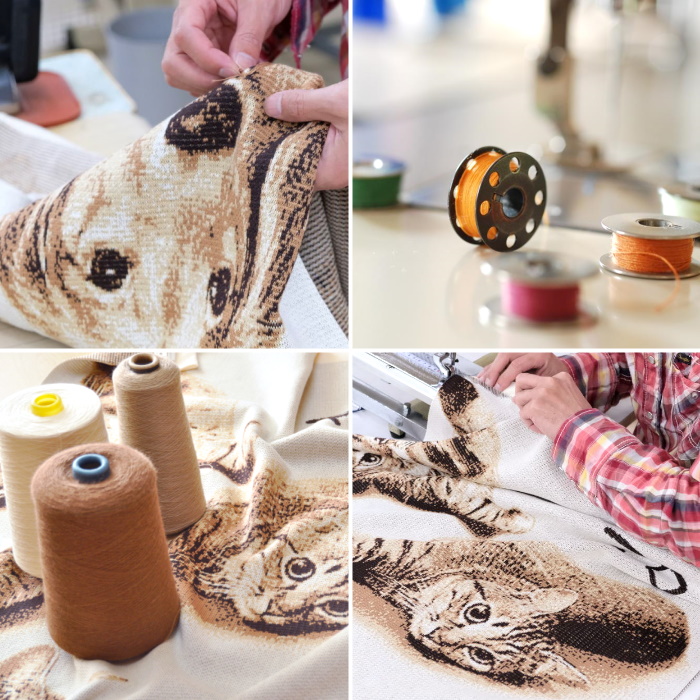
For some grieving families, having something soft to hold or place in a familiar spot at home brings comfort. It doesn’t replace the animal they miss. It simply gives their love and memories a place to rest.

One customer shared that a pet who had died from illness at age eight felt close again when the knitted keepsake arrived. They appreciated that the design was made with yarn, not printed.
Another customer told us how empty their home felt after their dog passed away. They had considered a stuffed animal, then found our custom knitted cushion. Taking part in the design process was comforting, and they eventually placed the cushion in the spot where their dog used to rest.

Not everyone wants a memorial object, and that’s okay. A photograph, a collar, a favorite blanket, or simply a treasured memory may mean just as much.
Writing a Letter in Your Pet’s Voice
Another way some people express their feelings is by writing an imagined letter from their pet. This isn’t about knowing what an animal would truly say. It’s a gentle exercise in remembering the bond you shared and offering yourself the compassion you might find difficult to accept.
Thank you for being with me. I loved our time together—the games we played and the birthday treats. I know you wish you had noticed that I was sick. Please remember all the days you cared for me, too. I felt your love. And the memories we made are still yours to keep.
You might write a letter like this for yourself, or help a grieving friend write one if they welcome the idea. There is no need to get every word right.

If You Still Feel Responsible for Your Pet’s Death
Our dog Mook once began to limp. At first, we thought it was something minor. Later, the veterinarian diagnosed bone cancer and explained how much pain he may have been enduring.
I still remember that experience. It taught me how painful it can be to discover that an animal was suffering when you didn’t realize it.
I can’t tell you that every outcome could have been prevented, or that a different decision would have changed nothing. Often, no one can know that for certain. What I can say is that one difficult moment does not erase a lifetime of care.
If you’re struggling with guilt after losing your pet, you don’t have to forgive yourself today. You don’t have to stop crying or turn every memory into a happy one. Perhaps, for now, you can simply make room for two truths: you wish something had been different, and you loved your pet very much.
One day, alongside the painful memories, you may find yourself remembering the way your pet looked at you, the sounds they made, or the small routines that made your days together special.
Those memories belong to your story, too.
Your Guilt Is Also a Reflection of Your Love
If you keep blaming yourself for your pet’s death, please remember this: the guilt you feel can also be a reflection of how deeply you loved your pet.
You don’t have to push those feelings away or force yourself to move on. Even the sadness and regret you carry today are part of your love. It’s okay to honor those feelings.
But there is one thing I hope you will never forget.
I believe your pet still treasures all the happy days you shared together.
The times you played together. The sound of your voice calling their name. The peaceful moments when they curled up beside you and fell asleep, knowing they were safe and loved.
Those ordinary moments were a beautiful part of your pet’s life. And I believe that love hasn’t disappeared.
Your pet loved you then, and I like to believe they still love you now.
So even on the days when you cannot forgive yourself, perhaps you can imagine your beloved pet quietly sitting beside you, just as they always did.
Not blaming you. Not judging you. Simply being on your side.
Because to your pet, you were never just the person who couldn’t prevent something painful. You were the person who gave them a lifetime of love.